
Transport of particles across cell membrane is one of the most important processes in human body. This article presents you what types of cell membrane transport we recognize, how they work and differences between types.
Human body needs micro and macroelements for proper functioning. We deliver them with meals, supplements or fluids. Do you ever consider how these particles get to final place?
To interests you a little do you know that:
– human body works as big battery
– it is biilions of condensers inside you
– membrane transporter enables you to read this article
Tabel of content
1. Cell Membrane – separation of two environment
2. What types of cell membrane transport do we recognize?
3. What is diffusion in biology?
4. Simple diffusion – the simplest type of membrane transport
7. Difference between carrier and channel protein?
8. What is membrane potential?
9. Role of resting potential and action potential
12. Secondary active transport
1. Cell Membrane - separation of two environments
The human cell is one of the most elementary parts of the body. Groups of cells create more sophisticated structures ,such as tissues or organs. To simplify human anatomy we distinguish two parts of the cell:
- cell membrane
- cell interior with mitochondria, cell nucleus, cytoplasm
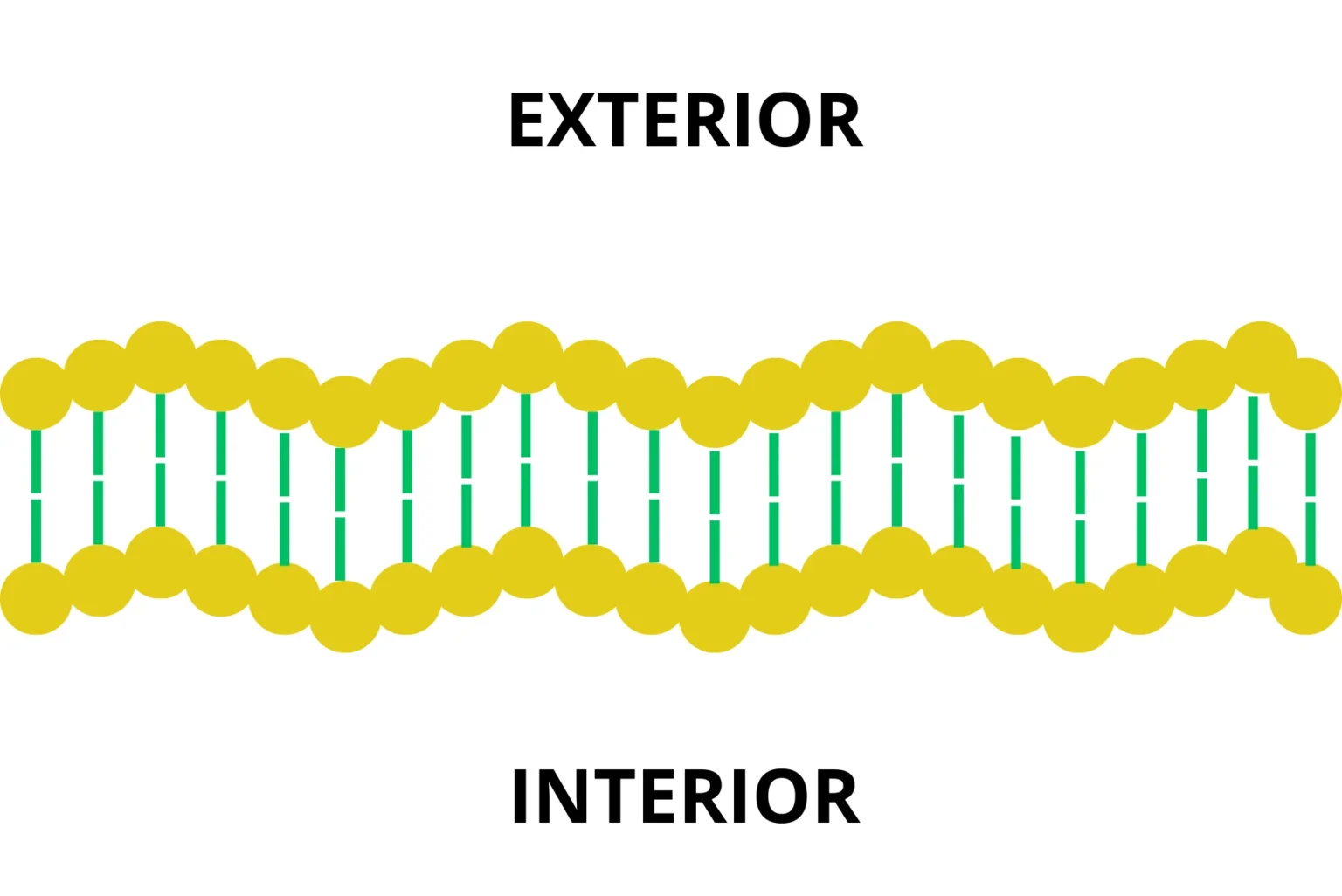
Cell membrane works as a fence. It separates intercellular fluid from extracellular fluid. Membrane plays a crucial role in important processes. It contains lipid bilayer and proteins. Amphiphilic phospholipids build lipid bilayer.
What does amphiphilic mean?
It is a property of chemical particles. In phospholipid example it has:
- hydrophilic exterior builds with phosphate group. It „like” water
- hydrophobic interior builds with 2 fatty chains. It doesn’t „like” water
2. What types of cell membrane transport do we recognize?
It is two main types of membrane transport:
- passive transport
- active transport
Passive transport doesn’t require ATP, unlike active transport. It is the main difference beetwen them.
Passive transport uses diffusion to transport particles. It consists of simple diffusion and facilitated diffusion. Active transport uses ATP to transport particles against concentration gradient..
3. What is diffusion in biology?
Diffusion is a transport of particles from high to low concentration. Entropy connects with diffusion. We observe it in human body and cosmic scale.
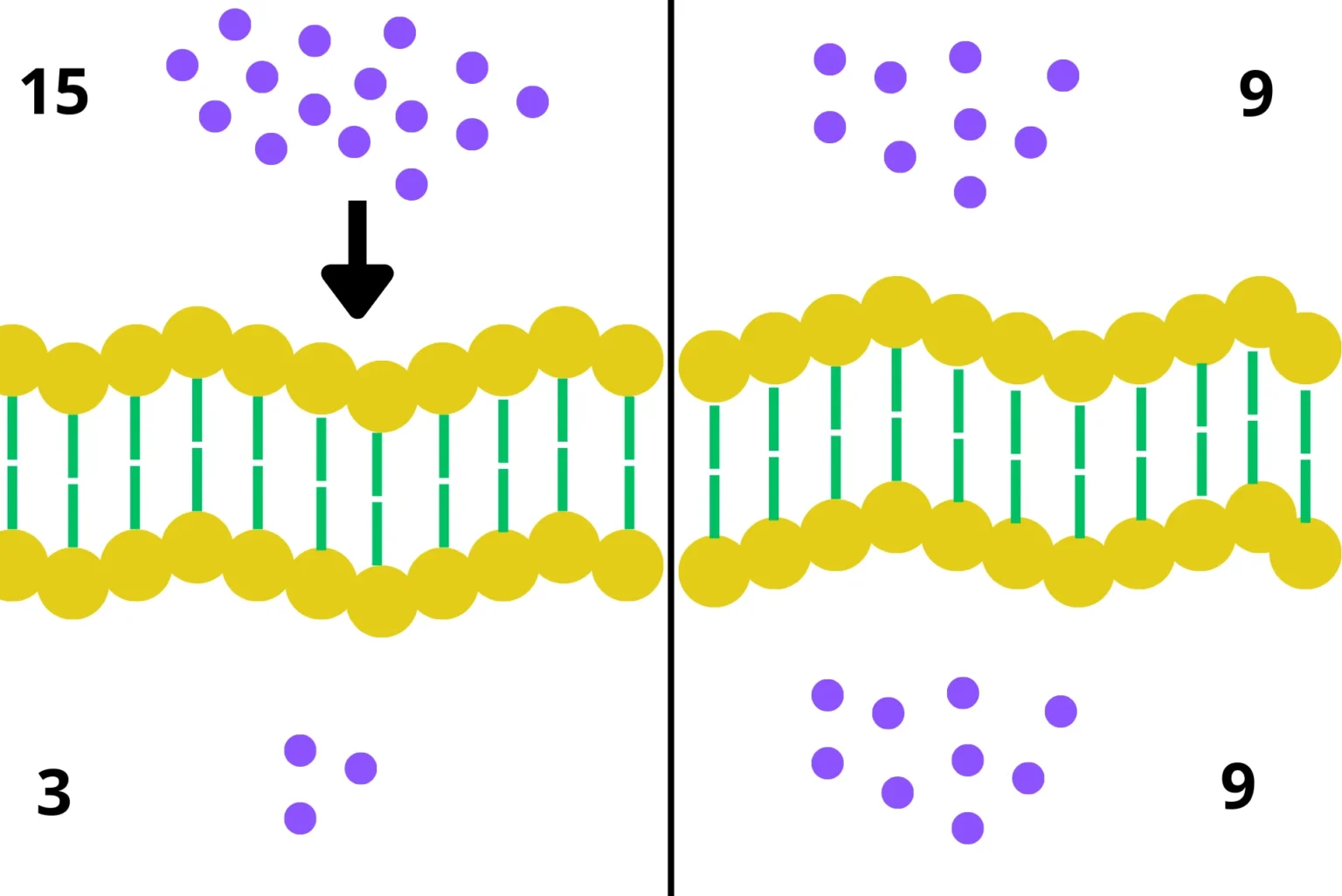
For better visualisation imagine yourself at house party. More and more people go into room you are in. It is starting to be very crowded. To relax a little you change room to less crowded. Particles do exactly the same when they flow from high to low concentration.
4. Simple diffusion - the simplest type of membrane transport
The simplest way to equal concentration is direct flow through cell membrane. However not every particles can do it. Only gases, hydrophobic particles, lipid-soluble particles can pass through membrane directly.
Oxygen, Carbon dioxide or fats can easily flow through lipid bilayer. Flow rates of particles depend on ability and level of their solubility in lipids.
SUMMARISE
- Cell membrane separates inside and outside environment of the cell
- Lipid bilayer and transporters build membrane
- Diffusion is a flow of particles from high concentration to low
- Not every particle can pass the membrane directly
5. What is channel protein?
As you know human body doesn’t contain gases and lipids only. Evolution prepares special transporters for rest of particles.
Channel proteins enable particles to diffuse through the cell membrane. In simple words they are a gap in lipid bilayer. Particles use it as highway to flow from high to low concentration.
Main advantage of channel protein is rate of diffuison. They can transport millions of particles per second. Channel proteins selectively choose type of particles they transport. Electrically charge particles use this type of transport. Diameter of gap and membrane potencial give the protein selectivity feature.
Flow through channel is possible when protein is activated. We distinguish 2 main types of activation:
– electrical activation
– ligand activation
6. Carrier proteins
The second type of membrane proteins are carrier proteins. They transport particles via diffusion but not in the same way as channel proteins. This is simple step-by-step explanation of carrier proteins transport technique:
- Protein opens a gate to its interior
- Particle flow inside protein
- Particle connect to protein
- Protein open gate on the other side
- Protein release particle on the other side
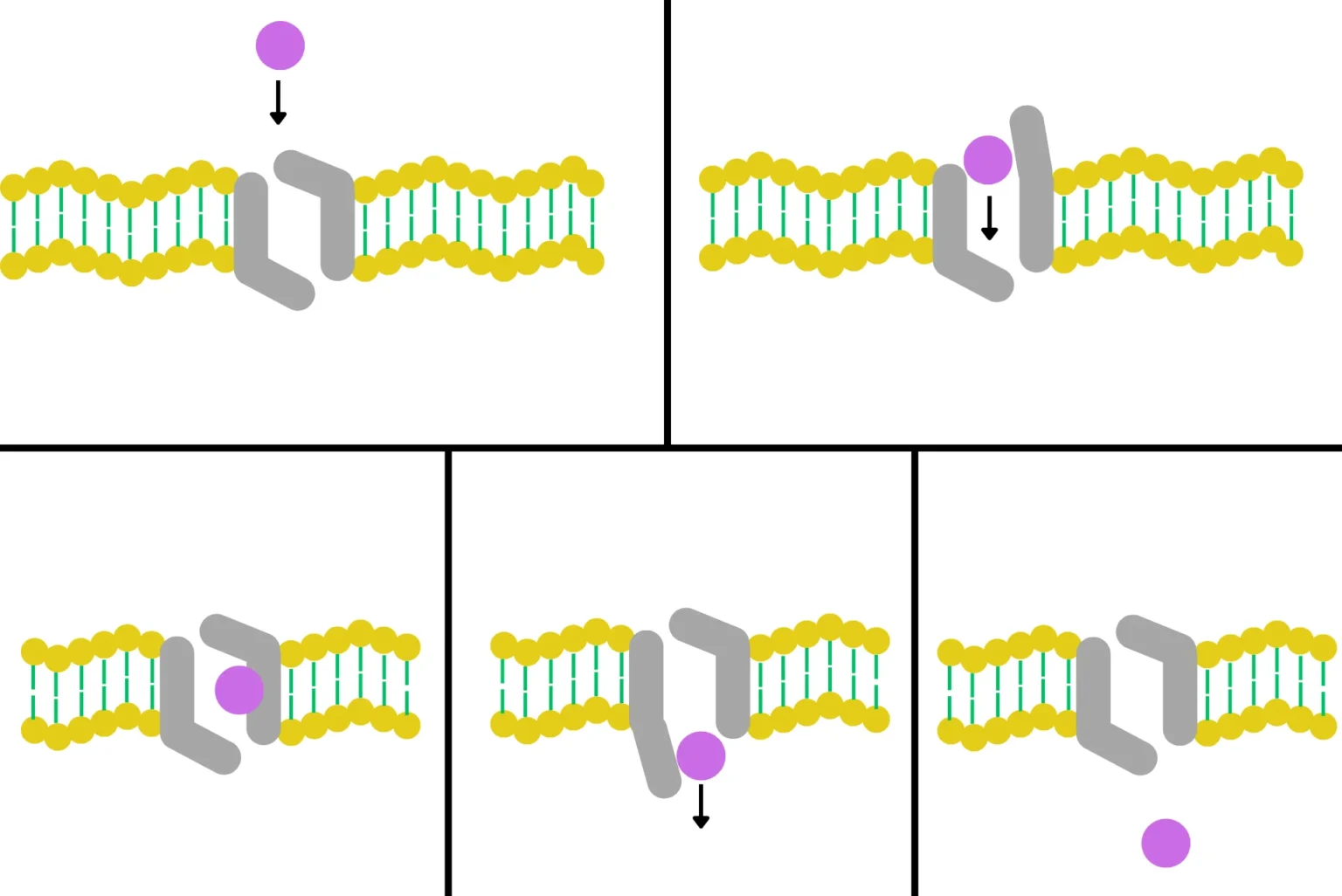
Protein use conformation to open and close gate. Conformation is a change in position of aminoacids in protein. Carrier proteins don’t need ATP to work. To perform conformation protein need activator.
Nowadays people consume more sugar than ever before in human’s history. Average American consume around 90 kg sugar per year.
This sweet substance is added to almost all products on store shelves.
There are two types of activators:
- electrical activation – it is a change in membrane potential
- ligand activation – it is a connection of specific chemical compound to protein
Flow rate of carrier proteins is way lower than channel proteins. They can transport thousands of particles per second. The need to change shape is their main limitation.
7. difference between carrier and channel protein
Both proteins are responsible for transport of particles across cell membrane. However, they do it in different way.
Channel protein is a simple gap in lipid bilayer. It doesn’t interact with particles. Carrier protein perform conformation to transport particles. It need to connect with particle to make flow possible.
8. What is membrane potential?
Membrane potential is a voltage difference between the inside and outside of the cell. It varies typically between -40 mV and -80 mV.
Two mechanisms create voltage :
- A difference in concentration of sodium and potassium across the cell membrane. Sodium-potassium pump create the difference. It is one of the most important transporter in the human body.
- The Impermeability of electrically charged particles through the lipid bilayer
SUMMARISE
- Electrically charged particles need transporters to go through membrane
- There is two types of transporters: channel proteins and carrier proteins
- Transporter needs activator to start transporting process
- Membrane potential is a voltage difference across two sides of the cell
- Membrane potential depends on concentration of sodium and pottasium
9. Role of resting potential and action potential
During the resting potential, the cell is at „rest”. In this situation, cell interior is negatively charged compared to exterior. A high concentration of potassium inside the cell makes it negatively charged.
Protein can’t undergo conformation without a change in membrane potential. Even slight changes in concentration of sodium and potassium influence membrane potential.
Flow of sodium particles into interior creates depolarization. It is a rise of voltage inside cell. Sufficient increase that exceed certain level creates action potential.
Human body uses action potentials to transmit nerve signals or induce muscle cramps. As you see we need action potentials for basic activites. Without changes in membrane potential, we couldn’t move or think. All of these is possible due to cell membrane and sodium-potassium pump.
10. Sodium-potassium pump
Cell can’t achieve an action potential without a resting potential. We can compare this situation to start the car without petrol. Resting potential acts like petrol. It sets up perfect conditions for action.
The sodium-potassium pump uses ATP to transport particles despite difference in concentration, It transports:
- 3 sodium ions from inside to outside
- 2 potassium ions from outside to inside
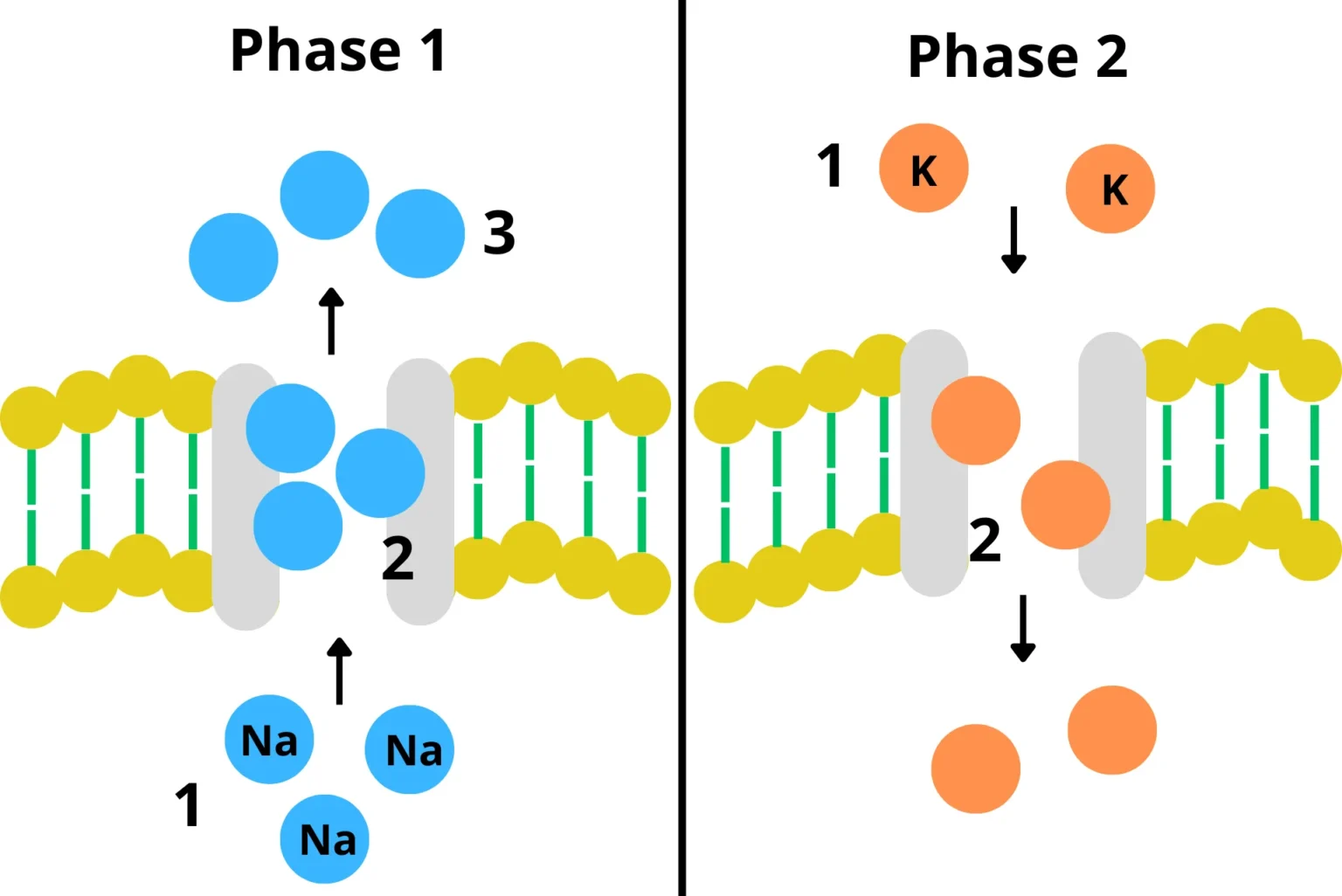
It creates high concentration of potassium inside and sodium outside of the cell. Main reason of 3:2 ratio is role of pump in action potential. Sodium-potassium pump sets up the resting potential. Cell can’t make action without resting potential
The pump works without rest. However, efficiency of transport decreases in time. The efficiency of the pump depends on particle concentration. The more particles to transport the more efficient pump is.
11. Primary active transport
Sodium-potassium pump is perfect example how active transport works. In active transport proteins needs ATP for working. Adenosine triphosphate (ATP) is a main energy currency in the human body. Transporters use ATP to transport particles despite of concentration gradient.
We can compare sodium-potassium pump to mechanical pump. It also uses petrol to pump water against the force of gravity.
SUMMARISE
- Human body needs action potential and resting potential for basic functions.
- There is no action potential without resting potential
- Sodium-potassium pump sets up resting potential
- Primary active transport uses ATP to transport despite difference in concentration
12. Secondary active transport
A different kind of active transport is secondary active transport. It relies on the work of primary active transport. The concentration gradient created by primary active transport is used to perform protein conformation.
To visualize the mechanism better we look closer at the sodium-potassium pump and sodium-glucose linked transport.
Difference between primary and secondary active transport
Both types of transport rely on ATP but in different way. Primary active transport use it directly to transport particles against concentration gradient. Secondary active transport doesn’t use ATP directly but in form of concentration gradient created by primary active transport.
As we know, sodium-potassium pump creates high concentration of sodium outside of the cell. Sodium particles try to diffuse to the interior of the cell because there is a lower concentration.
In secondary active transport carrier protein uses the energy contained in the sodium gradient to simultaneously transport glucose and sodium.
13. Cell as battery and condenser
The human body needs energy to function. However, we don’t need to eat all the time because human cells work like mini-batteries that store energy.
The cell uses difference in particle concentration to store energy. By controlling the flow of particles, the membrane uses energy to perform actions.
Cell membrane functions as two elements of electrical circuit:
- resistor
- condenser
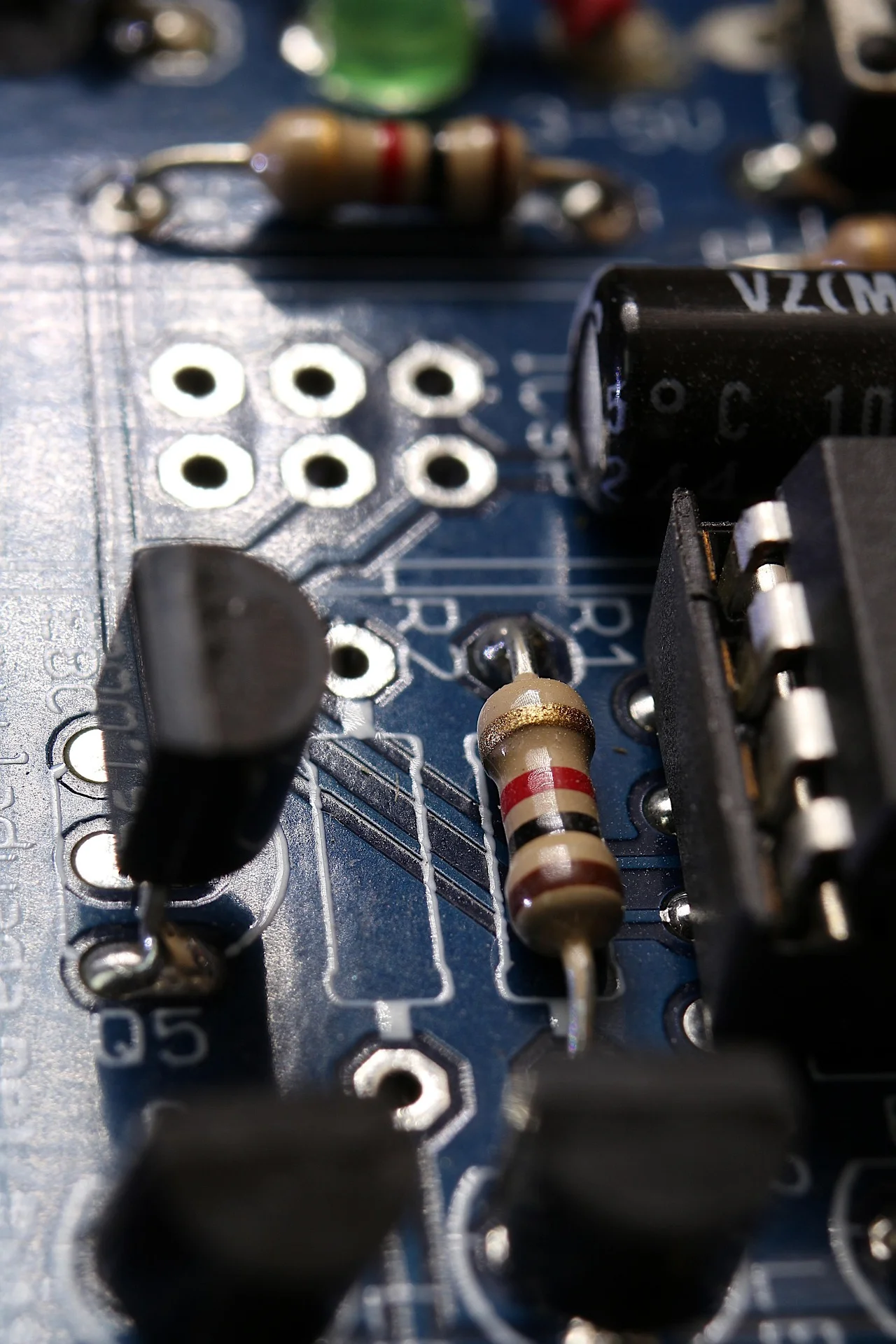
Thickness of the cell membrane is 7 nm. This ultra thin layer enables particles to pull themselves. However, the cell membrane is thick enough to stop particles from direct flow.
Structure of the cell membrane and condenser is similar. They both have an isolating layer that stores charges on both ends.
SUMMARISE
- Secondary active transport can’t function without primary active transport
- Human cells store energy in form of concentration difference
- Structure of the cell enables it to perform as resistor and condenser
Conclusion
This article focus only on human physiology. I think we can’t take care of our bodies without basic knowledge. In next article I will discuss more practical aspects of health so stay tuned. In meantime I recommend to read my previous article about cutting down sugar in diet.
Sources
[6] Guyton and Hall textbook medical physiology