
For the first time in history, people in developed countries don’t face the problems of hunger, but overeating. Rising statistics on obesity and overweight partially show us the scale. One of the reasons behind this situation is eating meals too frequently.
To menage this problem, we need to feel full longer. In this article we will show simple methods to improve satiety.
Tabel of content
1. Short history of overeating
Let’s start with our early ancestors who lived hundreds of thousands years ago. They followed a hunter-gatherer lifestyle. They only ate when they were lucky enough to find food. Effect of this lifestyle was highly irregular eating patterns.
The next stage in society evolution was domestication. From this moment we began farming and raising animals. It is the foundations of today’s food system. In contrary to modern times, even then most people couldn’t afford several meals a day.
Fast forward to 2025: we produce more food than we are able to eat. What is more, much of it is highly processed. As a result, many people eat too much, too often and choose low-quality food.
History of overeating - Summary
Human eating patterns have changed drastically since prehistoric times
Our ancestors ate less food and more irregularly than we do today.
The modern food system produces far more food than we are able to consume
2. Why am I hungry after eating?
How many times in your life have you felt hungry again shortly after finishing a meal? I suppose most of us experienced this more than once. In moments like these, we often reach for candy bars, sweets or other unhealthy snacks.
Unfortunately, highly processed foods suppress appetite only for a short time. Let’s take a closer look at what actually controls our hunger and satiety.
3. Ghrelin and Leptin
How do hormones regulate hunger and fullness?
There is a several mechanisms that control hunger and satiety in human body. One of most important involves a couple of hormones: ghrelin and leptin. We can think of them as fire and water.
Leptin, often called a satiety hormone, sends signals to brain that we are full. In this metaphor, leptin is the water that extinguish the fire. Ghrelin, on the other hand, starts the fire. As a hormone ghrelin tells the body that it’s time to seek food
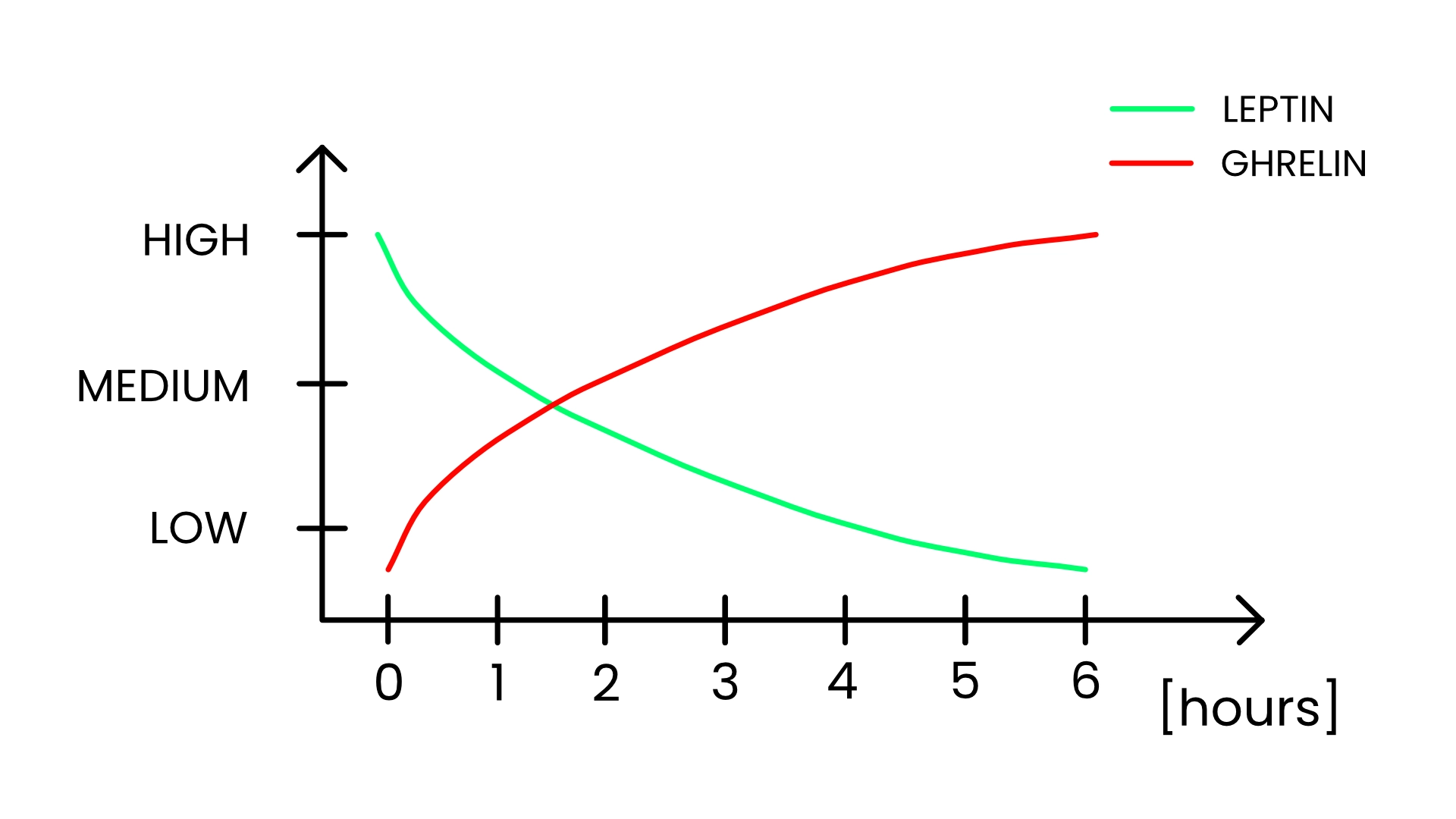
Levels of leptin and ghrelin are closely entwined with each other. When ghrelin level rises, which typically happens before the meal, leptin level decreases. The opposite situation occurs after we eat.
Not only food influence your hunger
Level of both hormones don’t depend on food only. Scientists found that after a sleepless night ghrelin levels rise while leptin level fall.
Many of us have experienced this ourselves, eating more sweets after a short Saturday night. This is also one of the reasons why getting enough sleep is so important when dieting. There is less likely to crave unhealthy snacks after 8 hours night.
Not only sleep deprivation increase ghrelin level. Stress is another factor that influence negatively our satiety. This explains why some people tend to “stress eat.”.
Eating food may temporarily mitigate stress, but it is only a short-term solution. Healthier and far more effective alternative is acupressure mat.
Ghrelin and leptin - Summary
- The two most important hormones that regulate hunger and satiety are ghrelin and leptin.
- Leptin signals the brain that we are full.
- Ghrelin signals the brain that we are hungry.
- Ghrelin and leptin are closely interconnected.
- Beside of food intake, stress and sleep duration also influence ghrelin level
4. Proteins naturally increase satiety
How do proteins helps to avoid hunger?
If we feel full and satisfied after a meal, it is less likely to reach for another one. One of the most effective ways to increase satiety is to eat enough protein. When we consume proteins, the body releases two hormones:
- GLP-1
- CCK
GLP-1 signals pancreas to produce only as much insulin as we currently need. It prevents from excessive insulin spikes that lead to post-meal fatigue and drowsiness. These spikes usually appear after meals rich in carbohydrates.
What is more important, both hormones slow down gastric emptying. This means that food stays longer in digestive system. It helps us to increase satiety and stay full for longer. As we already know, the longer we stay full, the less like we are to reach for another meal.
Why should you eat protein-rich breakfast?
Knowing the role of proteins in hunger and satiety, we can consider how to apply apply this knowledge. First of all, try to incorporate more proteins and healthy fats into your diet. A great place to start is breakfast.
Dispose of white bread, fruit juices and sweet pancakes. Replace them with eggs, dairy products, fish or meat. Such a breakfast will help you stay full much longer, often eliminating the need for a second breakfast or snacks.
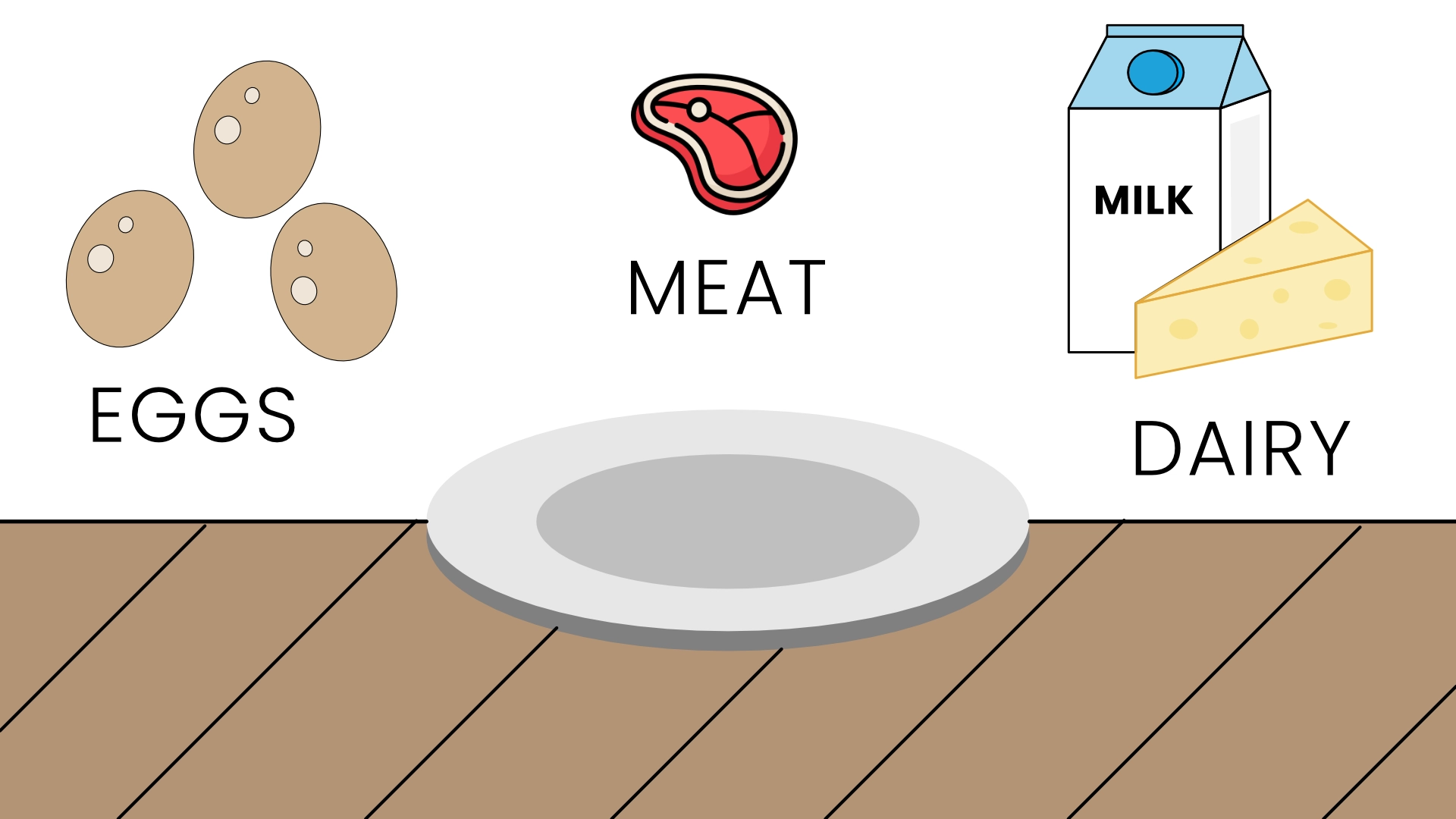
List of protein-rich foods that help boost fullness
- turkey
- tune
- salmon
- egg
- cottage cheese
- Greek yogurt
Proteins and Satiety - Summary
- Proteins naturally increase satiety
- After protein intake, the body releases two hormones: GLP-1 and CCK
- GLP-1 prevents from excessive insulin spikes
- Both hormones slow down gastric emptying
- To reduce hunger, add more protein-rich foods to your diet
5. Role of blood sugar stability in hunger
Why do I crave sweets after meals?
Consuming high-carbohydrate foods such as cereal, bread or orange juice leads to glucose spike in the bloodstream. If you don’t exercise after such a meal, you will likely experience tiredness, drowsiness and a noticeable drop in energy.
To fight this feeling, many people reach for sweet snacks. This is the worst solution you can choose.
More exercise and proteins
If your physical activity is not at a moderate or high level, it’s best to avoid high-carbohydrate meals. Replace pasta, rice or potatoes with bigger portions of meat and fish rich in proteins and healthy fats. Protein keep insulin response smaller and more stable. It reduces the post-meal urge to take a nap.
You should also pay close attention to ingredient labels. Food manufacturers often use different names to disguise added sugar in their products. It is especially tricky if we are not aware of them. It may be helpful to read my article where I reveal the common names used for hidden sugars.
Blood sugar stability - Summary
- High-carbohydrate foods leads to a rapid glucose spike.
- After high glucose spike, people often experience drop in energy.
- By reaching for sweets, we try to fight with post-meal tiredness.
- Exercise after a meal to burn excess carbohydrates.
- Replace carbohydrates with proteins to avoid high glucose spikes.
6. Add fiber to increase satiety
Fiber is a component of plant-based foods. Although the human body doesn’t digest it, fiber plays several important roles like prebiotic for gut bacteria.
It is also capable to decrease glucose spikes in the bloodstream by creating gel-like barrier in digestive system. Thin gel layer slows down the absorption of glucose into bloodstream. As a result, glucose levels rise more gradually, helping prevent the post-meal drop in energy.
List of fiber-rich, low-carbohydrate foods that suppress appetite
- Broccoli
- Cauliflower
- Zucchini
- Eggplant
- Avocado
- Raspberries
- Blackberries
Fiber - Summary
- All plant-based foods contain fiber
- Fiber forms a thin gel-like barrier that slows down glucose absorption
- Improve satiety by implementing more fiber-rich, low-carbohydrate foods into your diet
- Instead of pasta or rice, add steamed broccoli or cauliflower to your meal.
7. Caloric density
Caloric density refers to the number of calories contained in one gram of food. Let’s compare 100 grams of fresh strawberries and 100 grams of walnuts. One 100-gram serving of strawberries contains only 32 kcal, while the same amount of walnuts provide around 650 kcal.
To avoid hunger, choose food with low caloric density. They consist mostly of water and fiber, which allows you to physically fill your stomach while consuming relatively few calories. It is especially helpful for people trying to lose weight.
8. Other helpful techniques to improve satiety
The methods presented so far work very well. Although, we can add a few small habits to achieve the goal easier.
Drink more water to increase satiety
Since we know that physically filling the stomach helps reduce hunger, drink glass of water before and after each meal. This takes almost no effort and helps you feel fuller while staying hydrated
Prepare yourself
Preparation is just as important as the other strategies. If your home is full of snacks, it is more likely to give in to temptation. Set clear boundaries for yourself and make temptations harder to reach.
It will be helpful to:
- remove unhealthy snacks from your home
- do your shopping with a prepared grocery list
- avoid shopping when you’re hungry
- bring pre-prepared, nutritious meals to work
9. Conclusion
Hunger and satiety are regulated by several hormones. If you want to reach your goals, whether it’s loosing weight or eating healthier, you need to keep these hormones in balance. Just a few changes to your diet can increase satiety. Implement those changes and save the money you usually spend on sweets and dining out.
10. Sources
Sapiens: A Brief History of Humankind by Yuval Noah Harari – Short History of Overeating